


Uncategorized
Fibromyalgia and Chiropractic Care in Macon, GA: Finding Comfort in a Body That Hurts All Over
7th August 2026
Fibromyalgia is one of the most misunderstood conditions we see. The pain is everywhere and nowhere at once. Lab tests come back “normal.” Friends, coworkers, and sometimes even providers don’t quite get it. And through it all, you’re exhausted, achy, foggy, and just trying to make it through the day. If you’re managing fibromyalgia in Macon, GA, please know this: your pain is real, and you deserve compassionate, practical support.
At Phillips Chiropractic, we’ve spent more than two decades caring for Middle Georgia patients living with complex, chronic pain. This guide explains what fibromyalgia is, why it’s so challenging, and how gentle chiropractic care may fit into a broader plan to help you feel more like yourself again.
Image suggestion: A calm, softly lit treatment room that feels reassuring rather than clinical. Alt text: “Comfortable chiropractic treatment room for fibromyalgia patients in Macon, GA.”
What Is Fibromyalgia?
Fibromyalgia is a chronic disorder characterized by widespread musculoskeletal pain, along with fatigue, sleep problems, and difficulties with memory and concentration. Researchers believe it involves the way the brain and spinal cord process pain signals — essentially, the nervous system’s “volume knob” for pain is turned up, so signals that wouldn’t normally hurt are amplified into real, sometimes severe, pain.
This helps explain one of fibromyalgia’s most frustrating features: the pain is genuine even though there’s no visible injury or damage to point to. The Centers for Disease Control and Prevention and the National Institute of Arthritis and Musculoskeletal and Skin Diseases both describe fibromyalgia as a real, physiological condition — not something that’s “all in your head.”
Common symptoms of fibromyalgia
- Widespread pain — a constant, dull ache on both sides of the body, above and below the waist
- Fatigue — waking up tired even after long sleep, with energy that runs out quickly
- Sleep disturbances — trouble falling or staying asleep, and unrefreshing sleep
- “Fibro fog” — problems with focus, memory, and mental clarity
- Stiffness, especially in the morning
- Heightened sensitivity to touch, temperature, light, or sound
- Headaches, and sometimes digestive issues or mood changes
What Causes Fibromyalgia?
The exact cause isn’t fully understood, but researchers point to a combination of factors. Fibromyalgia often appears after a triggering event — a physical trauma such as a car accident, an illness, or significant psychological stress — in people who may be genetically predisposed. Over time, the nervous system appears to become sensitized, amplifying pain.
Because there’s no single cause and no simple test, fibromyalgia is typically diagnosed based on your symptom history and a physical exam, after ruling out other conditions. This is why coordinated care matters: getting an accurate diagnosis from your physician is an important foundation, and conservative therapies like chiropractic can then support your day-to-day management.
An Honest Word About Expectations
We’ll always be straight with you: there is currently no cure for fibromyalgia, and no responsible provider should claim otherwise. Fibromyalgia is a chronic condition that’s managed, not “fixed.” The most effective approach is usually multidisciplinary — combining medical management, movement, sleep and stress strategies, and hands-on therapies to reduce symptoms and improve quality of life.
That’s exactly where gentle chiropractic care can play a supporting role. Our goal isn’t to promise miracles — it’s to help you hurt a little less, move a little easier, and reclaim more good days, as part of a broader plan alongside your medical team.
How Chiropractic Care May Help With Fibromyalgia
For a condition rooted in how the nervous system processes pain, care that supports the spine and nervous system makes intuitive sense. Here’s how a gentle chiropractic approach may help.
Gentle, low-force techniques
Fibromyalgia patients are often extra-sensitive to pressure, so gentleness is everything. Dr. Phillips tailors techniques to your comfort level, frequently using lower-force adjustments and soft, careful soft-tissue work rather than aggressive manipulation. The aim is to improve mobility and reduce tension without provoking a flare.
Easing muscle tension and stiffness
Widespread muscle tightness and morning stiffness are hallmark complaints. Gentle adjustments and soft-tissue therapy can help release areas of tension, improve range of motion, and make daily movement more comfortable.
Supporting better sleep and function
Because chiropractic care works with the nervous system, many patients report improvements that ripple outward — less tension, easier movement, and in some cases better sleep. Since poor sleep and pain feed each other in fibromyalgia, any improvement in that cycle is valuable.
Image suggestion: A gentle stretching or mobility session guided by the chiropractor. Alt text: “Gentle mobility work for a fibromyalgia patient in Macon.”
A whole-person plan
At Phillips Chiropractic, your plan is built around you and may include gentle adjustments, soft-tissue therapy, guidance on gentle movement and stretching, posture and ergonomic tips, and lifestyle recommendations around sleep and stress. When helpful, we coordinate with your other providers so everyone’s working toward the same goal. If you also deal with chronic pain or nerve pain, we’ll fold that into the bigger picture.
Living Well With Fibromyalgia: Daily Strategies
In-office care is one piece; the daily habits below are just as important for managing fibromyalgia:
- Move gently and consistently. Low-impact activity like walking, swimming, or gentle stretching helps more than long rest, even though starting can feel hard. Begin small and build slowly.
- Protect your sleep. A consistent bedtime routine and good sleep environment can ease both fatigue and pain.
- Manage stress. Because stress can trigger flares, practices like deep breathing, gentle yoga, or mindfulness can genuinely help.
- Pace yourself. Learn to balance activity and rest so you don’t overdo it on good days and crash afterward.
- Track your triggers. A simple journal of pain, sleep, activity, and stress can reveal patterns worth adjusting.
- Build a support team. Fibromyalgia is easier to manage with providers, family, and friends who understand it.
The Arthritis Foundation offers excellent, patient-friendly resources on living with fibromyalgia that pair well with hands-on care.
Frequently Asked Questions About Fibromyalgia
Can chiropractic care cure my fibromyalgia? No. Fibromyalgia has no cure, and we won’t pretend otherwise. What gentle chiropractic care may do is help reduce muscle tension and stiffness, improve mobility, and support your overall comfort as part of a broader management plan alongside your physician.
Will adjustments make my fibromyalgia pain worse? Our approach is gentle and personalized specifically because fibromyalgia patients are often sensitive to pressure. Dr. Phillips adjusts techniques to your comfort and starts conservatively. Always tell us how you’re feeling so we can fine-tune your care.
Is it safe to exercise with fibromyalgia? For most people, gentle, gradual movement is one of the most helpful things you can do — but start slow and check with your provider. We can help you find comfortable ways to stay active without triggering flares.
Do you coordinate with my other doctors? Yes. Fibromyalgia is best managed as a team. When it’s helpful, we’re glad to coordinate with your physician and other providers.
Do you accept insurance? We accept most insurance plans, including VA benefits, and same-day appointments are often available. Reach out and we’ll walk you through your options.
Compassionate Fibromyalgia Support in Macon
Living with fibromyalgia is hard enough without feeling dismissed or alone in it. At Phillips Chiropractic, we take your pain seriously and meet you where you are — with gentle, personalized care aimed at helping you feel better and do more of what you love. We proudly serve Macon, Gray, Forsyth, Warner Robins, and all of Middle Georgia.
Ready for care that actually listens? Contact us today to schedule a visit or call (478) 475-4131. Let’s work toward more good days, together.

Uncategorized
Workers’ Comp Chiropractor in Macon, GA: Recovering From a Workplace Injury the Right Way
7th August 2026
Getting hurt on the job turns your life upside down fast. Suddenly you’re dealing with pain, missed work, worried finances, and a confusing claims process — all at once. If you’ve been injured at work in Macon, GA, a workers’ comp chiropractor can be one of your most valuable allies, helping you heal properly and navigate the paperwork so you can get safely back to work. At Phillips Chiropractic, we’ve spent more than 20 years helping Middle Georgia workers recover from on-the-job injuries.
This guide explains the most common workplace injuries, how chiropractic care helps, and how the Georgia workers’ compensation process works so you know your rights and your next steps.
Common Workplace Injuries
Work injuries aren’t limited to dramatic accidents. Many develop from the daily physical demands of a job. The injuries we treat most often include:
- Back and neck injuries — from lifting, bending, twisting, or a single bad movement
- Repetitive strain injuries — from performing the same motion over and over
- Slip-and-fall injuries — sprains, strains, and joint injuries from falls
- Soft-tissue injuries — muscle and ligament strains and sprains
- Whiplash — for workers who drive as part of the job
- Sciatica and nerve pain — often from lifting injuries or disc problems
These injuries affect workers across every industry in Middle Georgia — warehouse and manufacturing, healthcare, logistics, construction, office work, and more. What they have in common is that, left untreated, they tend to get worse and take longer to heal.
Why Choose a Chiropractor for a Work Injury?
Many workplace injuries are musculoskeletal — they involve the muscles, joints, ligaments, and nerves. That’s exactly what chiropractic care specializes in, which makes it a natural, conservative first-line option for many work injuries. Here’s why injured workers choose chiropractic care.
Drug-free, non-surgical recovery
Chiropractic care focuses on restoring proper function to injured joints and tissues without relying on medication or surgery. For many soft-tissue and spine-related work injuries, that conservative approach is exactly what national guidelines recommend trying first.
Getting to the root of the injury
Rather than simply masking pain, chiropractic care aims to restore proper motion and function so you heal more completely — reducing the odds that a nagging injury turns into a chronic problem down the road.
Thorough documentation
Workers’ comp claims live and die on documentation. As part of your care, we carefully evaluate and document your injuries, treatment, and progress — records that matter for your claim and your protection.
Image suggestion: A chiropractor performing a careful back exam on a patient after a work injury. Alt text: “Workers’ comp injury evaluation at a Macon chiropractic clinic.”
Support getting back to work
Our goal isn’t just to relieve pain — it’s to help you return to work safely and confidently, with guidance on movement, body mechanics, and preventing re-injury.
How Georgia Workers’ Compensation Works
Understanding your rights makes the whole process less stressful. Here’s a plain-English overview for Georgia workers. (This is general information, not legal advice — for specifics, consult the Georgia State Board of Workers’ Compensation or an attorney.)
Report your injury promptly
In Georgia, you should report a work injury to your employer as soon as possible — deadlines apply, and delays can complicate your claim. Report it in writing when you can, and keep a copy.
Understand the “panel of physicians”
Georgia employers are generally required to post a panel of physicians — a list of approved providers you can choose from for treatment of a work injury. Understanding this panel is important, because getting care from an authorized provider is part of how the system works. If you’re unsure how the panel affects your ability to see a chiropractor, ask your employer or the State Board, or speak with an attorney.
Your benefits
Workers’ compensation may cover authorized medical treatment for your injury and, in qualifying cases, a portion of lost wages while you recover. The specifics depend on your situation and Georgia law.
We help with the process
Navigating claims, authorizations, and paperwork is overwhelming when you’re also in pain. Our office is experienced with work-injury cases and can help you understand your options and keep your documentation in order. If your situation also involves a third party (for example, a work-related car accident), our guides to personal injury and auto accident care may be relevant too.
What to Do If You’re Hurt at Work
- Get to safety and seek care for any serious or emergency injury immediately.
- Report the injury to your employer promptly, in writing.
- Document everything — how it happened, who witnessed it, and your symptoms.
- Understand your provider options under Georgia’s panel-of-physicians rules.
- Follow through on treatment. Gaps in care can slow healing and complicate your claim.
- Don’t tough it out. “Walking it off” can turn a treatable injury into a chronic one.
Frequently Asked Questions About Workers’ Comp Chiropractic Care
Can I see a chiropractor for a workers’ comp injury in Georgia? Often, yes — but Georgia’s panel-of-physicians rules affect how work-injury care is authorized. The best step is to contact our office; we can help you understand your options and how to get authorized care.
Does it cost me anything? Authorized treatment for a covered work injury is generally paid through workers’ compensation, not out of your pocket. We’ll help you understand the specifics for your situation.
What if my claim is denied or disputed? It happens, and it doesn’t necessarily mean you’re out of options. Thorough documentation matters here, and you may want to consult an attorney. We’ll keep your records clear and complete either way.
How soon should I be seen after a work injury? As soon as possible. Prompt evaluation supports both your recovery and your claim, and early care often prevents a minor injury from becoming chronic.
Do you communicate with employers and adjusters? Yes. We’re experienced with work-injury cases and the documentation and communication they require.
Injured on the Job? Let’s Get You Back on Your Feet
A work injury is stressful enough without fighting through it alone. At Phillips Chiropractic, we help injured Middle Georgia workers heal properly, document their injuries carefully, and return to work with confidence. We serve Macon, Gray, Forsyth, Warner Robins, and the surrounding area, and we’re experienced with workers’ comp claims and liens.
Hurt at work? Contact us today to schedule an evaluation or call (478) 475-4131. Let’s protect your health and your claim.
Uncategorized
Neuropathy Treatment in Macon, GA: Understanding Nerve Pain and How to Find Relief
7th August 2026
That burning in your feet at night. The pins-and-needles tingling that won’t go away. The strange numbness that makes it hard to feel the floor beneath you. If any of that sounds familiar, you may be dealing with neuropathy — and you’re far from alone. Millions of Americans live with nerve-related pain, and for many, it slowly erodes their sleep, balance, independence, and peace of mind.
If you’re looking for help with neuropathy in Macon, GA, this guide will walk you through what neuropathy is, what causes it, the symptoms to watch for, and how a conservative, whole-person chiropractic approach may help you manage it. At Phillips Chiropractic, we’ve spent more than two decades helping Middle Georgia patients understand their nerve pain and take back control of their daily lives.
Image suggestion: A clear medical diagram showing the peripheral nerves branching down the leg and into the foot. Alt text: “Peripheral nerves affected by neuropathy in the feet and legs.”
What Is Neuropathy?
Neuropathy — more precisely, peripheral neuropathy — is damage to or dysfunction of the peripheral nerves, the vast network of nerves that carry signals between your brain and spinal cord and the rest of your body. When these nerves are damaged, the messages they send can become distorted, exaggerated, or lost entirely. That’s why neuropathy can cause such a strange mix of symptoms: pain where there shouldn’t be pain, and numbness where there should be feeling.
Your peripheral nerves come in three main types, and neuropathy can affect any or all of them:
- Sensory nerves, which carry sensations like temperature, touch, and pain
- Motor nerves, which control muscle movement
- Autonomic nerves, which regulate automatic functions like blood pressure, digestion, and sweating
Most people with neuropathy notice sensory symptoms first — and most often in the feet and hands, because the longest nerves in the body (which reach all the way to your extremities) tend to be affected earliest. The National Institute of Neurological Disorders and Stroke offers an in-depth overview of how these nerves work and what happens when they’re damaged.
Common Symptoms of Neuropathy
Neuropathy symptoms can range from mildly annoying to genuinely debilitating, and they often develop gradually. Watch for:
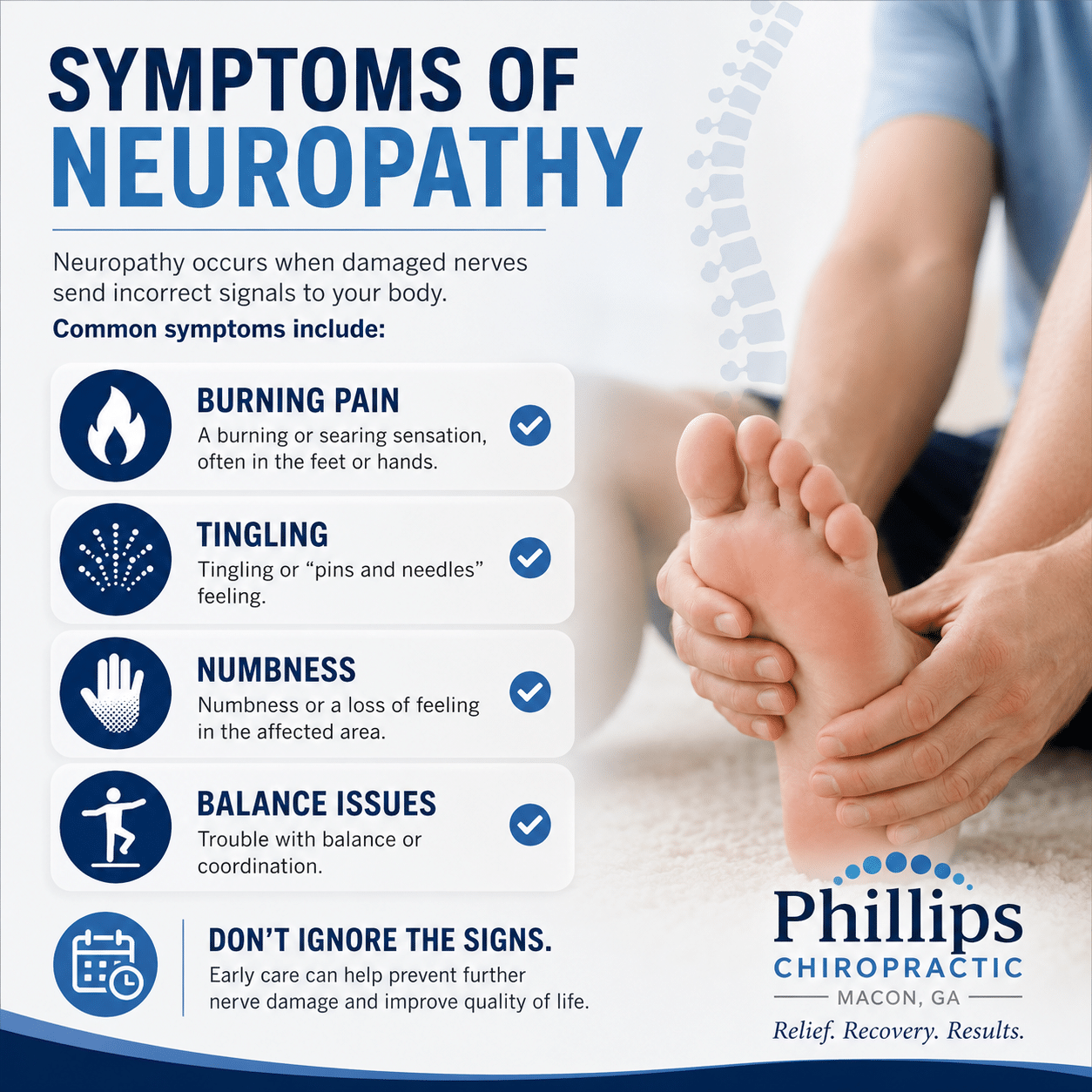
- Burning or shooting pain, often worse at night
- Tingling or “pins and needles” in the feet, legs, hands, or arms
- Numbness or a reduced ability to feel touch, temperature, or pain
- A feeling of wearing an invisible sock or glove
- Sharp, electric, or stabbing sensations
- Extreme sensitivity to touch, where even bedsheets feel painful
- Muscle weakness or a feeling of heaviness in the limbs
- Balance problems and increased risk of falls, because you can’t feel your feet properly
Image suggestion: A clean “Symptoms of Neuropathy” checklist graphic with simple icons for burning, tingling, numbness, and balance issues. Alt text: “Common neuropathy symptoms checklist.”
Because numbness reduces your ability to feel injuries — especially on the feet — neuropathy also raises the risk of unnoticed cuts, blisters, and infections. That’s one reason it’s so important to take nerve symptoms seriously rather than waiting them out.
What Causes Neuropathy?
Neuropathy isn’t a single disease — it’s a symptom of an underlying problem, and there are many possible causes. Identifying the root cause is essential, which is why coordinated, whole-person care matters so much. Common causes include:
Diabetes
Diabetic neuropathy is the single most common cause of peripheral neuropathy. Over time, high blood sugar can damage the small blood vessels that nourish your nerves, leading to the classic burning, tingling, and numbness that often starts in the feet. If you have diabetes, managing your blood sugar is a critical part of protecting your nerves — the American Diabetes Association is an excellent resource, and your medical doctor should be a key partner in your care.
Spinal and nerve compression
Not all nerve pain comes from systemic disease. Sometimes the problem is mechanical — a nerve being compressed or irritated where it exits the spine, or somewhere along its path. Herniated discs, spinal misalignment, and conditions like sciatica can all produce nerve pain, tingling, and numbness that radiate into the limbs. This is an area where chiropractic care can be especially relevant, because it directly addresses spinal alignment and nerve pressure.
Other common causes
- Vitamin deficiencies, particularly B vitamins
- Injuries and trauma, including car accidents and repetitive-stress injuries
- Certain medications, including some chemotherapy drugs
- Alcohol overuse
- Autoimmune and inflammatory conditions
- Thyroid or kidney disorders
- Idiopathic neuropathy, where no clear cause is found despite testing
The Mayo Clinic provides a thorough breakdown of these and other causes. The takeaway: because neuropathy has so many potential drivers, a careful evaluation is the foundation of any sensible treatment plan.
An Honest Word About Expectations
We believe in being straight with our patients. Neuropathy is a complex condition, and its outlook depends heavily on the underlying cause. When nerve damage is driven by something systemic like uncontrolled diabetes, the most important step is managing that root condition with your medical team — and no chiropractor should ever tell you otherwise. Chiropractic care is not a cure for diabetes, and it’s not a magic fix for nerve damage.
What conservative chiropractic care can do for many people is help manage symptoms, improve function, address any mechanical (spine-related) contributors, and support overall nervous-system health — often as part of a broader plan alongside your physician. Our goal is to help you feel and function better and to be a straightforward, collaborative partner in your care.
How Chiropractic Care May Help With Neuropathy
Because your spine protects the nerve roots that branch out to the rest of your body, spinal health and nerve health are deeply connected. Here’s how a chiropractic approach may support neuropathy patients.
Relieving nerve compression
When neuropathy symptoms are caused or worsened by a pinched or irritated nerve in the spine, restoring proper alignment and joint motion can reduce that pressure. For patients whose tingling, numbness, or burning traces back to the lower back or neck, addressing the mechanical source can produce meaningful relief. This is a very different situation from purely systemic neuropathy, which is why a thorough exam to determine the type of neuropathy is so important.
Image suggestion: A chiropractor performing a careful lower-limb and reflex examination on a seated patient. Alt text: “Chiropractor evaluating a neuropathy patient’s legs and feet in Macon, GA.”
Improving circulation and mobility
Gentle adjustments, soft-tissue work, and targeted movement can help improve local circulation and mobility. Because healthy blood flow supports nerve health, and because staying mobile helps protect balance and strength, these are valuable pieces of a comprehensive plan.
Supporting nervous-system function
The central premise of chiropractic care is that a spine that moves well and is free from interference supports a nervous system that functions well. For neuropathy patients, that whole-system perspective — combined with practical guidance on movement, footwear, and daily habits — can complement medical management nicely.
A personalized plan built around you
At Phillips Chiropractic, Dr. Phillips designs each neuropathy plan individually. Depending on your exam, your plan may include:
- Gentle spinal and extremity adjustments where mechanical nerve irritation is present
- Soft-tissue therapy to reduce tension and support circulation
- Balance and strengthening exercises to reduce fall risk and keep you steady
- Lifestyle and nutrition guidance to support nerve health
- Coordination with your physician when systemic causes like diabetes are involved
What to Expect at Your First Visit
Understanding your specific type of neuropathy is step one, so your first visit centers on a careful evaluation.
A detailed history
We’ll ask about your symptoms — where they are, when they started, what they feel like, and what makes them better or worse — along with your medical history, medications, and any conditions like diabetes. These details help us understand what’s driving your nerve pain.
A hands-on neurological and physical exam
Dr. Phillips will assess your sensation, reflexes, muscle strength, balance, and the mechanics of your spine and extremities. This helps distinguish nerve pain with a mechanical, spine-related component (where chiropractic care may directly help) from purely systemic neuropathy (where our role is supportive and collaborative). If we believe you need additional medical testing or a specialist, we’ll say so.
A clear, honest plan
You’ll leave understanding what we found, what’s realistic to expect, and exactly what your plan involves — including what you can do at home. No hype, no false promises — just a clear path forward.
Living Well With Neuropathy: Practical Tips
Beyond in-office care, small daily habits make a real difference for neuropathy patients:
- Inspect your feet daily. Because numbness can hide injuries, check for cuts, blisters, or redness — and see a professional promptly if something looks off.
- Choose supportive, well-fitting footwear to protect your feet and improve stability.
- Stay active within your limits. Gentle, regular movement supports circulation and balance.
- Manage underlying conditions like diabetes closely with your physician.
- Prioritize sleep and stress management, since both influence how intensely you feel pain.
- Reduce fall risk at home with good lighting, grab bars where needed, and clear walkways.
If burning, tingling, or numbness is affecting your sleep, your balance, or your peace of mind, don’t just push through it. These symptoms are your body asking for help — and the sooner you address them, the better.
Frequently Asked Questions About Neuropathy
Can a chiropractor cure my neuropathy? No honest provider can promise a cure, because it depends entirely on the cause. When nerve symptoms stem from a mechanical issue like spinal nerve compression, chiropractic care can directly help. When they stem from a systemic condition like diabetes, our role is to support symptom management and function alongside your medical team. We’ll always be straight with you about what to expect.
Is chiropractic care safe if I have diabetic neuropathy? For most people, gentle chiropractic care is a safe complement to medical management. Dr. Phillips reviews your full history and coordinates with your physician when appropriate. Managing your blood sugar with your doctor remains the top priority for diabetic neuropathy.
What does neuropathy pain feel like? Most commonly, it’s described as burning, tingling, “pins and needles,” numbness, or sharp electric sensations — usually starting in the feet or hands and often worse at night. If that sounds like you, an evaluation is a smart next step.
Do you accept insurance for neuropathy care? Yes. We accept most insurance plans, including VA benefits, and we offer same-day appointments when available. Reach out and we’ll help you understand your options.
When should I see a doctor about nerve symptoms? Sooner rather than later — especially if symptoms are spreading, worsening, affecting your balance, or interfering with daily life. Early evaluation helps identify the cause and protect against complications.
Take Control of Your Nerve Pain in Macon
You don’t have to accept a life ruled by burning feet, sleepless nights, and unsteady steps. At Phillips Chiropractic, we’ll help you understand what’s really going on with your nerves and build a personalized, honest plan to help you feel and function better — coordinating with your medical team every step of the way. We proudly serve Macon, Gray, Forsyth, Warner Robins, and all of Middle Georgia.
If chronic nerve pain is wearing you down, you may also want to read our guide to chronic pain relief.
Ready to take the first step? Contact us today to schedule your evaluation or call (478) 475-4131. Let’s get you back on steady feet.
Uncategorized
Chronic Pain Relief in Macon, GA: A Complete Guide to Getting Your Life Back
7th August 2026
If you’ve been living with pain that just won’t quit — day after day, month after month — you already know how much it can steal from your life. It changes how you sleep, how you work, how you play with your kids or grandkids, and even how you feel about the future. If you’re searching for real answers to chronic pain in Macon, GA, you’re in the right place. At Phillips Chiropractic, we’ve spent more than 20 years helping people across Middle Georgia move better, hurt less, and get back to the things that matter.
This guide breaks down what chronic pain actually is, why it happens, and how a drug-free, non-surgical chiropractic approach may help you find lasting relief — not just a temporary mask over the problem.
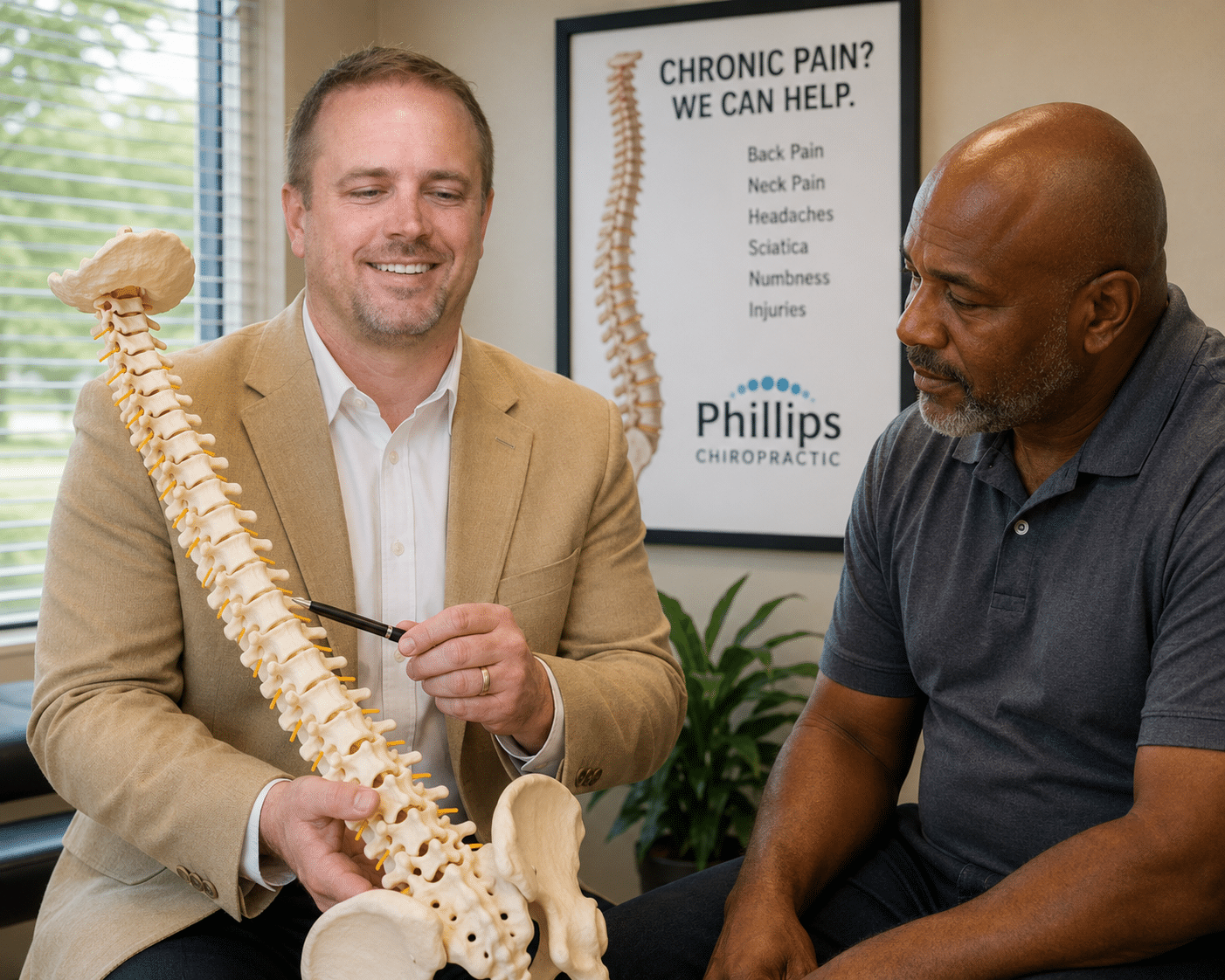
Image suggestion: A warm, natural-light photo of Dr. Phillips reviewing a spine model with a patient, both looking at the model together. Alt text: “Chiropractor explaining the spine to a chronic pain patient in Macon, GA.”
What Is Chronic Pain, Exactly?
Most of us are familiar with acute pain — the sharp, immediate signal you feel when you stub your toe, pull a muscle, or sprain an ankle. Acute pain has a clear purpose: it tells you something is wrong so you’ll protect the injured area while it heals. Once the tissue repairs itself, the pain fades.
Chronic pain is different. By definition, chronic pain is pain that persists for 12 weeks or longer — often long after the original injury or illness has healed. Sometimes it lingers because of an ongoing condition like arthritis. Other times, the original injury is gone but the nervous system has essentially “learned” the pain and keeps firing those signals anyway. Either way, the result is the same: a pain problem that has become a condition in its own right.
According to the Centers for Disease Control and Prevention, chronic pain is one of the most common reasons adults seek medical care in the United States, and it’s closely linked to reduced quality of life, difficulty working, anxiety, and depression. In other words, chronic pain is never “just” physical — it touches every part of your life.
Common types of chronic pain we see in Macon
- Low back and neck pain — by far the most common, often tied to posture, old injuries, or degenerative changes
- Joint pain — knees, shoulders, hips, and hands, frequently related to arthritis or overuse
- Nerve-related pain — burning, tingling, or shooting pain from conditions like neuropathy or sciatica
- Headaches and migraines — including tension-type headaches that originate in the neck
- Widespread pain — such as the body-wide aching seen in fibromyalgia
- Post-injury pain — lingering discomfort after a car accident, work injury, or sports injury
Why Does Chronic Pain Happen?
Understanding why you hurt is the first step toward doing something about it. Chronic pain usually develops through one or more of the following pathways.
1. Unresolved musculoskeletal problems
When a joint isn’t moving the way it should — because of a past injury, poor posture, or the wear-and-tear of daily life — the surrounding muscles compensate. Over time, that compensation creates tension, inflammation, and restricted motion. The body enters a frustrating loop: restricted joints lead to muscle guarding, muscle guarding leads to more restriction, and the cycle feeds itself. Breaking that cycle is one of the core goals of chiropractic care.
2. Nervous system sensitization
Your spine houses and protects your spinal cord — the information superhighway between your brain and the rest of your body. When pain signals fire over and over for weeks or months, the nervous system can become sensitized, meaning it amplifies pain signals and even generates pain in response to things that shouldn’t hurt at all. This is a big part of why chronic pain can feel out of proportion to any obvious injury, and why simply “resting” often isn’t enough to fix it.
3. Inflammation and lifestyle factors
Ongoing inflammation — driven by things like poor sleep, high stress, a sedentary lifestyle, or diet — can keep pain simmering in the background. Addressing these factors is part of a whole-person approach to lasting relief.
4. Degenerative changes
As we age, discs lose hydration, cartilage wears down, and joints can develop arthritis. These changes are normal, but they can contribute to chronic pain when combined with poor movement patterns or old injuries. The good news: even when we can’t reverse degeneration, we can often improve how those joints move and how much they hurt.
The Problem With “Just Mask It” Approaches
For many people, the first stop for chronic pain is a bottle of pain relievers. Medication has its place, and we’re grateful for it in the right circumstances — but for long-term pain, a “mask it and hope” strategy has real downsides:
- It doesn’t fix the cause. Pain relievers change how you perceive pain; they don’t restore proper joint motion or calm a sensitized nervous system.
- Tolerance and side effects. Over time, some medications require higher doses for the same effect, and long-term use of certain drugs carries serious risks.
- The pain comes back. When the medication wears off, the underlying problem is still there.
That’s why national guidelines increasingly recommend non-drug, conservative therapies as a first-line approach for common chronic pain conditions like low back pain. The American Chiropractic Association and research summarized by the National Center for Complementary and Integrative Health both point to spinal manipulation and other conservative care as reasonable, evidence-informed options for many people with chronic musculoskeletal pain.
How Chiropractic Care Helps With Chronic Pain
Chiropractic care is built around a simple but powerful idea: when your spine and joints move properly and your nervous system is free from interference, your body is better able to function and heal. Here’s how that translates into relief for chronic pain.
Restoring proper joint motion
The hallmark of chiropractic care is the adjustment — a precise, controlled movement applied to a restricted joint to restore its normal motion. When a joint that’s been “stuck” starts moving correctly again, several things happen: muscle tension around it eases, circulation improves, and the constant stream of irritation signals to the nervous system calms down. For many patients, this is the moment the pain cycle finally starts to break.
Reducing pressure on nerves
When spinal joints are misaligned or discs are compressed, nearby nerves can become irritated — producing pain that may radiate into the arms, legs, or elsewhere. By improving spinal alignment and motion, chiropractic care aims to reduce that irritation, which is why so many patients with sciatica, nerve pain, and radiating symptoms find relief.
Calming the whole system
Because chiropractic care works directly with the spine and nervous system, many patients notice benefits beyond the treated area — better sleep, less overall tension, and improved mobility. When your body isn’t constantly bracing against pain, it can finally relax and recover.
Image suggestion: A close-up of a gentle, hands-on spinal adjustment in a clean, modern treatment room. Alt text: “Gentle chiropractic adjustment for chronic pain relief in Macon.”
A personalized, whole-person plan
There’s no such thing as a one-size-fits-all chronic pain patient, so there’s no one-size-fits-all plan. At Phillips Chiropractic, Dr. Phillips takes the time to understand your history, examine how you move, and identify the specific drivers of your pain. Your plan may combine several tools, such as:
- Spinal and extremity adjustments to restore motion
- Soft-tissue therapy to release tight, guarded muscles
- Therapeutic exercises and stretches to build strength and stability so relief lasts
- Posture and ergonomic guidance for work and home
- Lifestyle recommendations around movement, sleep, and stress that support healing
What to Expect at Your First Visit
If you’ve never seen a chiropractor for chronic pain, the unknown can feel intimidating. Here’s what a first visit at Phillips Chiropractic typically looks like so you can walk in knowing what to expect.
A thorough consultation
We start by listening. You’ll share your pain history — when it started, what makes it better or worse, how it affects your daily life, and what you’ve already tried. This conversation matters, because the details of your story often point directly to the cause.
A hands-on examination
Next comes a physical evaluation. We assess your posture, range of motion, muscle tone, and the specific joints involved. In some cases, imaging or additional testing may be recommended to get a complete picture. The goal is a clear, accurate understanding of what’s driving your pain — not guesswork.
A clear explanation and plan
One of the things patients tell us they appreciate most is that we explain what we find. You’ll leave your first visit understanding what’s contributing to your pain and what a realistic path to relief looks like — including how many visits it may take and what you can do at home to speed things along.
Care at your pace
Chiropractic adjustments are generally gentle, and Dr. Phillips tailors his techniques to your comfort level, age, and condition. If you’re nervous about “cracking,” let us know — there are lower-force techniques available, and your comfort always comes first.
Chronic Pain and Everyday Life in Middle Georgia
Chronic pain doesn’t happen in a vacuum. The way we live and work in Macon and the surrounding communities plays a real role. Long commutes, desk jobs, physically demanding trades, weekend yard work in the Georgia heat, and time spent hunched over phones all add up. Small, repeated stresses on the spine — day after day, year after year — are often the quiet contributors behind “I don’t even know how I hurt it” pain.
That’s why our approach goes beyond the treatment room. We help you identify and change the daily habits that keep your pain alive, whether that’s how you sit at your workstation, how you lift, or how you sleep. Relief that lasts comes from combining hands-on care with smarter daily movement.
Real Relief Is Possible — Even If You’ve Tried Everything
If you’ve bounced from one solution to the next without lasting results, it’s easy to lose hope. But here’s what two decades of practice has taught us: many people who thought they’d “just have to live with it” find meaningful relief once someone finally addresses the root cause instead of the symptoms. Chronic pain is complex, and no honest provider can promise a miracle — but a thorough, personalized, conservative approach helps a great many people reclaim function and comfort they thought were gone for good.
You don’t have to keep organizing your life around your pain. There is a path forward, and it starts with a conversation.
Frequently Asked Questions About Chronic Pain
How long does it take to feel relief from chiropractic care? It varies. Some patients feel noticeably better after the first few visits, while chronic, long-standing problems often take longer because we’re retraining tissues and calming a sensitized nervous system. During your evaluation, we’ll give you a realistic timeline based on your specific situation.
Is chiropractic care safe for chronic pain? For most people, chiropractic care is a safe, conservative option — which is exactly why it’s recommended as a first-line approach for many common pain conditions. Dr. Phillips reviews your health history and tailors techniques to your needs. If your condition requires medical co-management, we’ll tell you.
Do I need a referral to see a chiropractor in Macon? No. You can schedule directly with our office. We accept most insurance plans, including VA benefits and attorney liens, and same-day appointments are often available.
Can chiropractic care help if my pain is from arthritis or a “worn-out” joint? Often, yes. While we can’t reverse degeneration, improving how a joint moves and reducing the muscle tension around it can meaningfully lower pain and improve function. Many of our joint pain patients fall into this category.
What if I’m nervous about being adjusted? That’s completely normal, and we’ll never push you past your comfort level. Let us know, and we’ll use gentle, low-force techniques and walk you through everything before we do it.
Take the First Step Toward a Pain-Free Life in Macon
You’ve read the guide — now let’s talk about your pain. Dr. Phillips and the team at Phillips Chiropractic have helped thousands of Middle Georgia residents get back to living, and we’d be honored to help you too. We serve Macon, Gray, Forsyth, Warner Robins, and the surrounding communities, we accept most insurance, and same-day appointments are frequently available.
Ready to stop living around your pain? Contact us today to schedule your appointment or call (478) 475-4131. Relief could be closer than you think.

Uncategorized
Workers’ Compensation Injuries: Why Chiropractic Care Speeds Healing and Prevents Reinjury
1st December 2025
Work injuries can take a heavy toll — physically, financially, and emotionally. Whether caused by lifting, repetitive motion, slips, or falls, these injuries often involve the spine, muscles, or joints. At Phillips Chiropractic in Macon, GA, we specialize in helping workers recover quickly and safely.
The first goal of chiropractic care is to reduce pain and restore mobility. Misalignments caused by workplace injuries can place pressure on nerves, weaken muscles, and increase inflammation. Chiropractic adjustments help restore normal alignment and improve the body’s biomechanics.
Rehabilitation exercises are also essential for treating work injuries. We help patients strengthen weak muscles, improve posture, and regain stability to prevent future injuries. Proper ergonomics — whether at a desk, on a construction site, or in a warehouse — are also reviewed to help patients avoid reinjury.
Chiropractic care is drug-free, non-invasive, and covered under most workers’ compensation cases. Phillips Chiropractic provides documentation and communicates with insurance representatives to ensure smooth case management.
Getting injured at work can feel overwhelming, but with the right care, recovery is possible — and you can return stronger than before.

Uncategorized
Finding Freedom from Joint Pain: How Chiropractic Restores Mobility Naturally
1st December 2025
Joint pain affects millions of people, from young athletes to older adults. Whether caused by arthritis, overuse, poor posture, or injury, joint pain can make daily life difficult, limiting your ability to walk, lift, bend, or enjoy the activities you love. At Phillips Chiropractic in Macon, GA, we specialize in helping patients find natural, drug-free relief from joint pain.
One of the most common misconceptions is that joint pain is simply part of getting older — but this isn’t true. In many cases, joint pain is the result of misalignments in the spine or extremities. When joints are not properly aligned, they experience uneven pressure, leading to inflammation, stiffness, and pain.
Using gentle chiropractic adjustments, we work to restore proper joint motion and alignment. This helps reduce inflammatory pressure, improve circulation, and relieve stress on surrounding tissues. Over time, this can significantly improve mobility and decrease pain.
But joint pain isn’t just affected by the joints themselves — it’s also influenced by muscle strength, flexibility, and posture. That’s why we integrate corrective exercises and stretching programs designed to strengthen the muscles surrounding painful joints. Strong, balanced muscles help stabilize joints, reducing the likelihood of future pain.
Lifestyle factors also play a significant role in joint health. Poor ergonomics at work, lack of hydration, inflammatory diets, and stress can all contribute to worsening joint pain. At Phillips Chiropractic, we help patients identify harmful habits and replace them with healthier, joint-supporting routines.
Even small changes — drinking more water, improving posture, adding nutrient-rich foods — can dramatically impact joint comfort.
Patients who seek chiropractic care for joint pain often report improvements in flexibility, reduced stiffness, and a greater ability to perform physical activities. Some even find that conditions they’ve struggled with for years finally begin to improve.
Joint pain doesn’t have to control your life. By addressing the root causes, chiropractic care offers a natural, effective way to restore movement and improve quality of life.