

Uncategorized
Neuropathy Treatment in Macon, GA: Understanding Nerve Pain and How to Find Relief
7th August 2026
That burning in your feet at night. The pins-and-needles tingling that won’t go away. The strange numbness that makes it hard to feel the floor beneath you. If any of that sounds familiar, you may be dealing with neuropathy — and you’re far from alone. Millions of Americans live with nerve-related pain, and for many, it slowly erodes their sleep, balance, independence, and peace of mind.
If you’re looking for help with neuropathy in Macon, GA, this guide will walk you through what neuropathy is, what causes it, the symptoms to watch for, and how a conservative, whole-person chiropractic approach may help you manage it. At Phillips Chiropractic, we’ve spent more than two decades helping Middle Georgia patients understand their nerve pain and take back control of their daily lives.
Image suggestion: A clear medical diagram showing the peripheral nerves branching down the leg and into the foot. Alt text: “Peripheral nerves affected by neuropathy in the feet and legs.”
What Is Neuropathy?
Neuropathy — more precisely, peripheral neuropathy — is damage to or dysfunction of the peripheral nerves, the vast network of nerves that carry signals between your brain and spinal cord and the rest of your body. When these nerves are damaged, the messages they send can become distorted, exaggerated, or lost entirely. That’s why neuropathy can cause such a strange mix of symptoms: pain where there shouldn’t be pain, and numbness where there should be feeling.
Your peripheral nerves come in three main types, and neuropathy can affect any or all of them:
- Sensory nerves, which carry sensations like temperature, touch, and pain
- Motor nerves, which control muscle movement
- Autonomic nerves, which regulate automatic functions like blood pressure, digestion, and sweating
Most people with neuropathy notice sensory symptoms first — and most often in the feet and hands, because the longest nerves in the body (which reach all the way to your extremities) tend to be affected earliest. The National Institute of Neurological Disorders and Stroke offers an in-depth overview of how these nerves work and what happens when they’re damaged.
Common Symptoms of Neuropathy
Neuropathy symptoms can range from mildly annoying to genuinely debilitating, and they often develop gradually. Watch for:
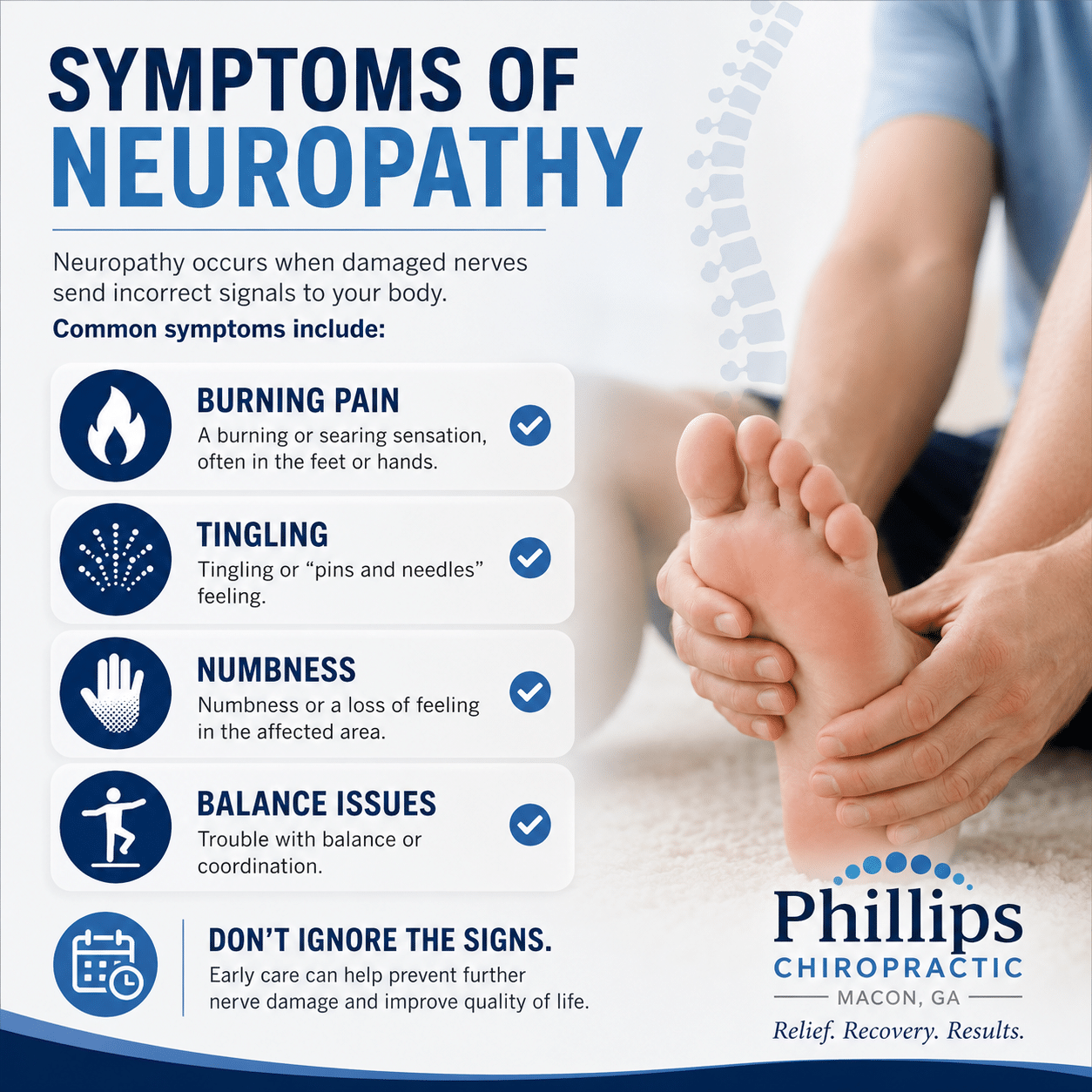
- Burning or shooting pain, often worse at night
- Tingling or “pins and needles” in the feet, legs, hands, or arms
- Numbness or a reduced ability to feel touch, temperature, or pain
- A feeling of wearing an invisible sock or glove
- Sharp, electric, or stabbing sensations
- Extreme sensitivity to touch, where even bedsheets feel painful
- Muscle weakness or a feeling of heaviness in the limbs
- Balance problems and increased risk of falls, because you can’t feel your feet properly
Image suggestion: A clean “Symptoms of Neuropathy” checklist graphic with simple icons for burning, tingling, numbness, and balance issues. Alt text: “Common neuropathy symptoms checklist.”
Because numbness reduces your ability to feel injuries — especially on the feet — neuropathy also raises the risk of unnoticed cuts, blisters, and infections. That’s one reason it’s so important to take nerve symptoms seriously rather than waiting them out.
What Causes Neuropathy?
Neuropathy isn’t a single disease — it’s a symptom of an underlying problem, and there are many possible causes. Identifying the root cause is essential, which is why coordinated, whole-person care matters so much. Common causes include:
Diabetes
Diabetic neuropathy is the single most common cause of peripheral neuropathy. Over time, high blood sugar can damage the small blood vessels that nourish your nerves, leading to the classic burning, tingling, and numbness that often starts in the feet. If you have diabetes, managing your blood sugar is a critical part of protecting your nerves — the American Diabetes Association is an excellent resource, and your medical doctor should be a key partner in your care.
Spinal and nerve compression
Not all nerve pain comes from systemic disease. Sometimes the problem is mechanical — a nerve being compressed or irritated where it exits the spine, or somewhere along its path. Herniated discs, spinal misalignment, and conditions like sciatica can all produce nerve pain, tingling, and numbness that radiate into the limbs. This is an area where chiropractic care can be especially relevant, because it directly addresses spinal alignment and nerve pressure.
Other common causes
- Vitamin deficiencies, particularly B vitamins
- Injuries and trauma, including car accidents and repetitive-stress injuries
- Certain medications, including some chemotherapy drugs
- Alcohol overuse
- Autoimmune and inflammatory conditions
- Thyroid or kidney disorders
- Idiopathic neuropathy, where no clear cause is found despite testing
The Mayo Clinic provides a thorough breakdown of these and other causes. The takeaway: because neuropathy has so many potential drivers, a careful evaluation is the foundation of any sensible treatment plan.
An Honest Word About Expectations
We believe in being straight with our patients. Neuropathy is a complex condition, and its outlook depends heavily on the underlying cause. When nerve damage is driven by something systemic like uncontrolled diabetes, the most important step is managing that root condition with your medical team — and no chiropractor should ever tell you otherwise. Chiropractic care is not a cure for diabetes, and it’s not a magic fix for nerve damage.
What conservative chiropractic care can do for many people is help manage symptoms, improve function, address any mechanical (spine-related) contributors, and support overall nervous-system health — often as part of a broader plan alongside your physician. Our goal is to help you feel and function better and to be a straightforward, collaborative partner in your care.
How Chiropractic Care May Help With Neuropathy
Because your spine protects the nerve roots that branch out to the rest of your body, spinal health and nerve health are deeply connected. Here’s how a chiropractic approach may support neuropathy patients.
Relieving nerve compression
When neuropathy symptoms are caused or worsened by a pinched or irritated nerve in the spine, restoring proper alignment and joint motion can reduce that pressure. For patients whose tingling, numbness, or burning traces back to the lower back or neck, addressing the mechanical source can produce meaningful relief. This is a very different situation from purely systemic neuropathy, which is why a thorough exam to determine the type of neuropathy is so important.
Image suggestion: A chiropractor performing a careful lower-limb and reflex examination on a seated patient. Alt text: “Chiropractor evaluating a neuropathy patient’s legs and feet in Macon, GA.”
Improving circulation and mobility
Gentle adjustments, soft-tissue work, and targeted movement can help improve local circulation and mobility. Because healthy blood flow supports nerve health, and because staying mobile helps protect balance and strength, these are valuable pieces of a comprehensive plan.
Supporting nervous-system function
The central premise of chiropractic care is that a spine that moves well and is free from interference supports a nervous system that functions well. For neuropathy patients, that whole-system perspective — combined with practical guidance on movement, footwear, and daily habits — can complement medical management nicely.
A personalized plan built around you
At Phillips Chiropractic, Dr. Phillips designs each neuropathy plan individually. Depending on your exam, your plan may include:
- Gentle spinal and extremity adjustments where mechanical nerve irritation is present
- Soft-tissue therapy to reduce tension and support circulation
- Balance and strengthening exercises to reduce fall risk and keep you steady
- Lifestyle and nutrition guidance to support nerve health
- Coordination with your physician when systemic causes like diabetes are involved
What to Expect at Your First Visit
Understanding your specific type of neuropathy is step one, so your first visit centers on a careful evaluation.
A detailed history
We’ll ask about your symptoms — where they are, when they started, what they feel like, and what makes them better or worse — along with your medical history, medications, and any conditions like diabetes. These details help us understand what’s driving your nerve pain.
A hands-on neurological and physical exam
Dr. Phillips will assess your sensation, reflexes, muscle strength, balance, and the mechanics of your spine and extremities. This helps distinguish nerve pain with a mechanical, spine-related component (where chiropractic care may directly help) from purely systemic neuropathy (where our role is supportive and collaborative). If we believe you need additional medical testing or a specialist, we’ll say so.
A clear, honest plan
You’ll leave understanding what we found, what’s realistic to expect, and exactly what your plan involves — including what you can do at home. No hype, no false promises — just a clear path forward.
Living Well With Neuropathy: Practical Tips
Beyond in-office care, small daily habits make a real difference for neuropathy patients:
- Inspect your feet daily. Because numbness can hide injuries, check for cuts, blisters, or redness — and see a professional promptly if something looks off.
- Choose supportive, well-fitting footwear to protect your feet and improve stability.
- Stay active within your limits. Gentle, regular movement supports circulation and balance.
- Manage underlying conditions like diabetes closely with your physician.
- Prioritize sleep and stress management, since both influence how intensely you feel pain.
- Reduce fall risk at home with good lighting, grab bars where needed, and clear walkways.
If burning, tingling, or numbness is affecting your sleep, your balance, or your peace of mind, don’t just push through it. These symptoms are your body asking for help — and the sooner you address them, the better.
Frequently Asked Questions About Neuropathy
Can a chiropractor cure my neuropathy? No honest provider can promise a cure, because it depends entirely on the cause. When nerve symptoms stem from a mechanical issue like spinal nerve compression, chiropractic care can directly help. When they stem from a systemic condition like diabetes, our role is to support symptom management and function alongside your medical team. We’ll always be straight with you about what to expect.
Is chiropractic care safe if I have diabetic neuropathy? For most people, gentle chiropractic care is a safe complement to medical management. Dr. Phillips reviews your full history and coordinates with your physician when appropriate. Managing your blood sugar with your doctor remains the top priority for diabetic neuropathy.
What does neuropathy pain feel like? Most commonly, it’s described as burning, tingling, “pins and needles,” numbness, or sharp electric sensations — usually starting in the feet or hands and often worse at night. If that sounds like you, an evaluation is a smart next step.
Do you accept insurance for neuropathy care? Yes. We accept most insurance plans, including VA benefits, and we offer same-day appointments when available. Reach out and we’ll help you understand your options.
When should I see a doctor about nerve symptoms? Sooner rather than later — especially if symptoms are spreading, worsening, affecting your balance, or interfering with daily life. Early evaluation helps identify the cause and protect against complications.
Take Control of Your Nerve Pain in Macon
You don’t have to accept a life ruled by burning feet, sleepless nights, and unsteady steps. At Phillips Chiropractic, we’ll help you understand what’s really going on with your nerves and build a personalized, honest plan to help you feel and function better — coordinating with your medical team every step of the way. We proudly serve Macon, Gray, Forsyth, Warner Robins, and all of Middle Georgia.
If chronic nerve pain is wearing you down, you may also want to read our guide to chronic pain relief.
Ready to take the first step? Contact us today to schedule your evaluation or call (478) 475-4131. Let’s get you back on steady feet.